
Heart Diamond Engagement Rings
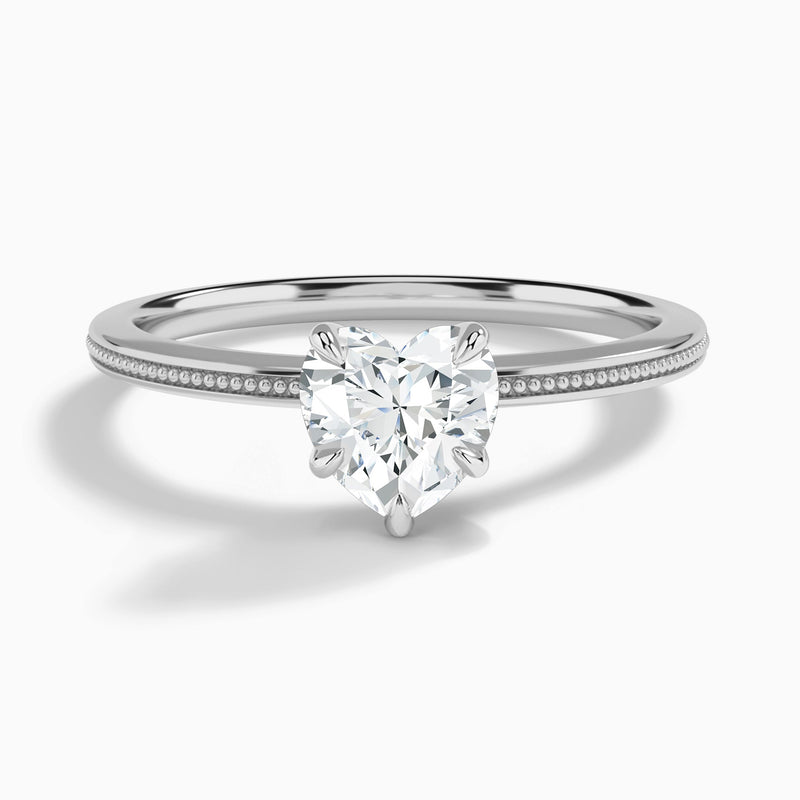
Celebrate your love story with heart diamond engagement rings. This romantic shape symbolizes devotion, making it a perfect choice for unforgettable moments.






Customer Reviews
Hear why our customers love Lucenjuri
Lab Grown Heart Shaped Diamond Engagement Rings
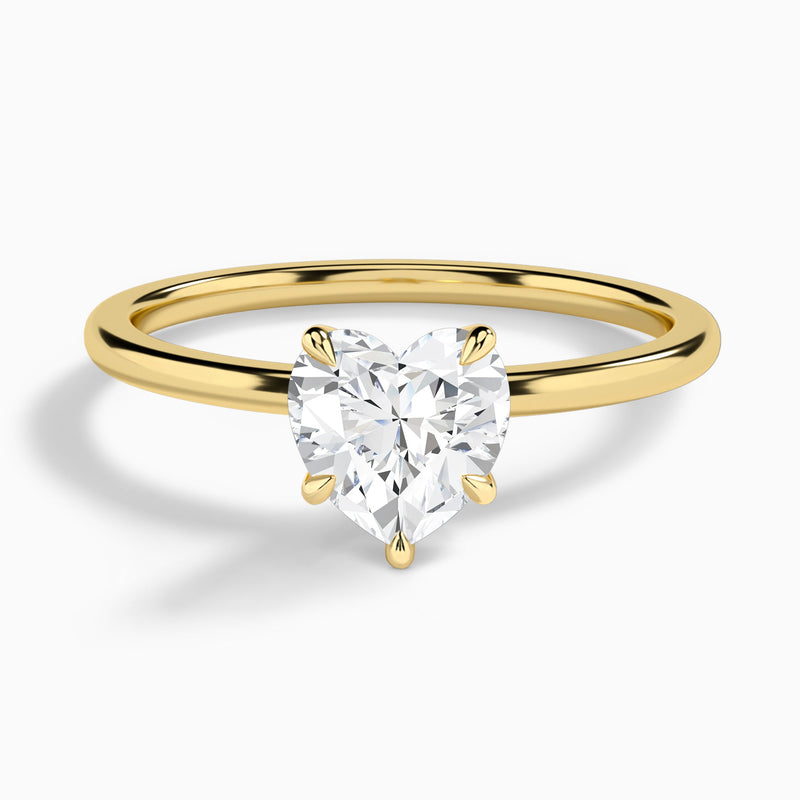
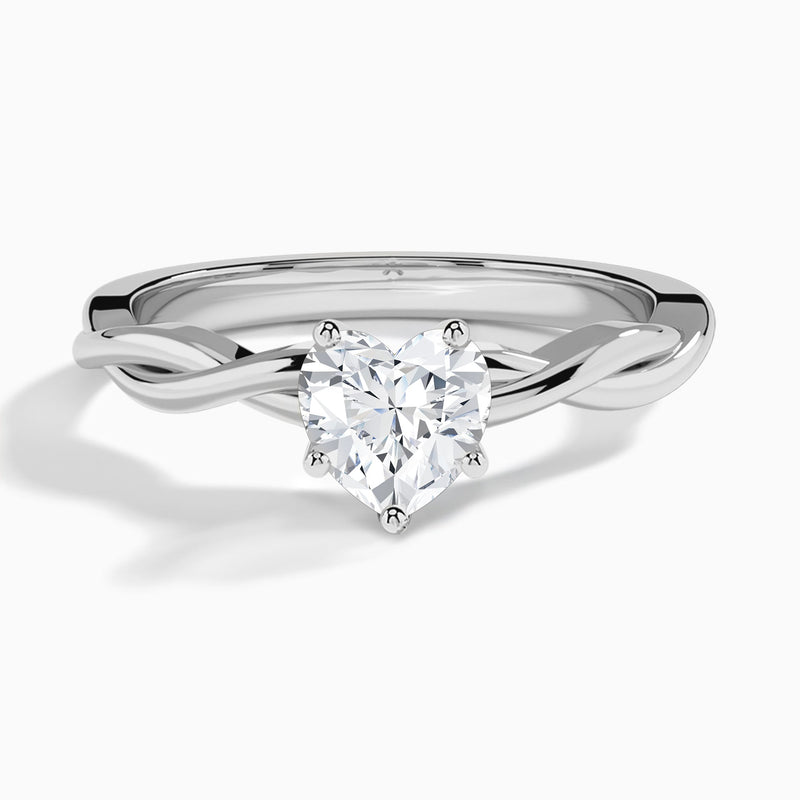
Let’s be entirely real: the heart shape is not for someone who wants to blend into the background. It is a bold, high-fashion statement for the ultimate modern romantic. Heart shaped diamond engagement rings skip the conventional, safe geometries of round or oval stones and lean completely into a silhouette that is rich with symbolism and visual drama. Cut with 56 to 58 brilliant facets, this shape delivers an incredible amount of explosive, fiery sparkle. It’s an intentional, stylized choice for anyone who wants a ring that is deeply personal, brilliantly alive, and utterly unforgettable.
Premium Craftsmanship: The Lab Grown Heart Diamond
Choosing a lab heart shaped diamond is an incredibly smart, strategic design move. First, the baseline reality check: lab diamonds are real diamonds—chemically, physically, and optically identical to mined stones. They deliver that exact same jaw-dropping, high-octane scintillation while completely bypassing the heavy environmental and ethical footprint of traditional mining.
But here is the insider trade secret on the heart shape: it is one of the most technically difficult cuts for a diamond cutter to execute. It requires absolute, dead-on structural precision to balance the curves and make sure the cleft is clean and sharp. Because lab diamonds do not carry that traditional mined markup, you aren't forced to compromise on stone quality. You have the full budget flexibility to prioritize an absolutely flawless, master-level cut and step up to a larger, show-stopping carat size that makes the heart silhouette beautifully defined and unmistakable on your hand.
How to Pick a Heart Cut That Actually Looks Right
Because a heart shape is so highly specialized, you cannot just buy it off a grading report. You have to look at the actual stone to ensure it looks balanced, organic, and full of life. Here is exactly what to look for when evaluating the silhouette:
- Stick to the Sweet Spot Ratio: To get a perfectly proportioned heart, aim for a length-to-width ratio between 0.90 and 1.10 (essentially a perfect 1:1 square outline). If the ratio drops too low, the heart will look squat and wide; if it’s too high, it will look awkwardly stretched and narrow.
- Examine the Symmetry: Bad symmetry completely ruins a heart shape. Imagine a line cutting right down the center from the top cleft to the bottom point—the two halves must mirror each other flawlessly. The lobes (the top rounded curves) must be the exact same height and fullness, and the wings (the sides) must have a clean, fluid curve.
- Insist on a Sharp Cleft and Point: The top V-shaped cleft needs to be sharp and distinct, not a shallow, accidental-looking dip. Similarly, the bottom tip must be crisp and clearly defined. If the cleft or the point is too soft, the stone will just look like a poorly cut pear or a distorted round diamond from a distance.
- Mind the Carat Weight Threshold: The heart silhouette is very hard to see in tiny stones. We highly recommend staying at 0.75 carats or higher—and ideally above 1.00 to 2.00 carats—to ensure the iconic heart shape has a powerful, recognizable presence on your finger.
Smart Strategies for the 4Cs
When shopping for a lab grown heart diamond, you want to invest your budget exactly where it impacts the visual beauty of the ring:
- Clarity: Look for VS2 or higher. The brilliant facet layout is fantastic at crushing light to hide tiny natural marks, but you want to make sure there are absolutely no inclusions right in the center table or near the top cleft where they can break the visual symmetry.
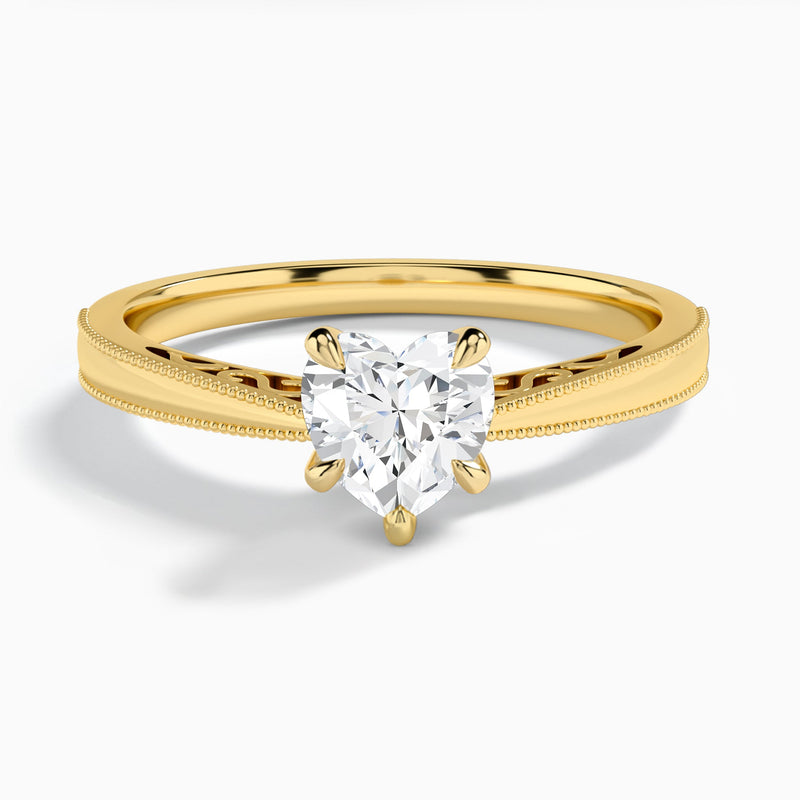
- Color: Heart cuts tend to hold onto color slightly more in their rounded lobes and sharp bottom tip. For a completely icy look in platinum or white gold, stick to a D to G range. If you are setting the stone in a warm yellow gold or rose gold band, you can safely drop to an H or I grade.
Styling Your Heart Shape Layout
The bold, expressive silhouette of a heart shaped diamond opens up some incredibly modern and secure setting options:
- The Modern Bezel Frame: A major contemporary trend is the sleek bezel setting. Wrapping a heart diamond in a slim, solid gold rimnot only delivers an ultra-modern, clean-lined look, but it also provides maximum protection for the stone's edges and sharp bottom point—perfect for a fast-paced lifestyle.
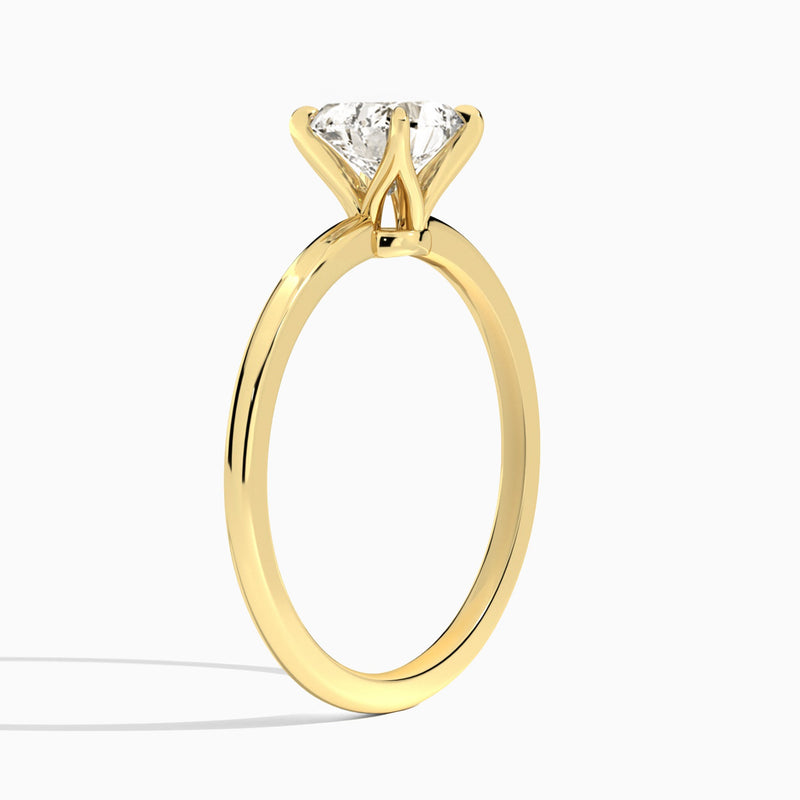
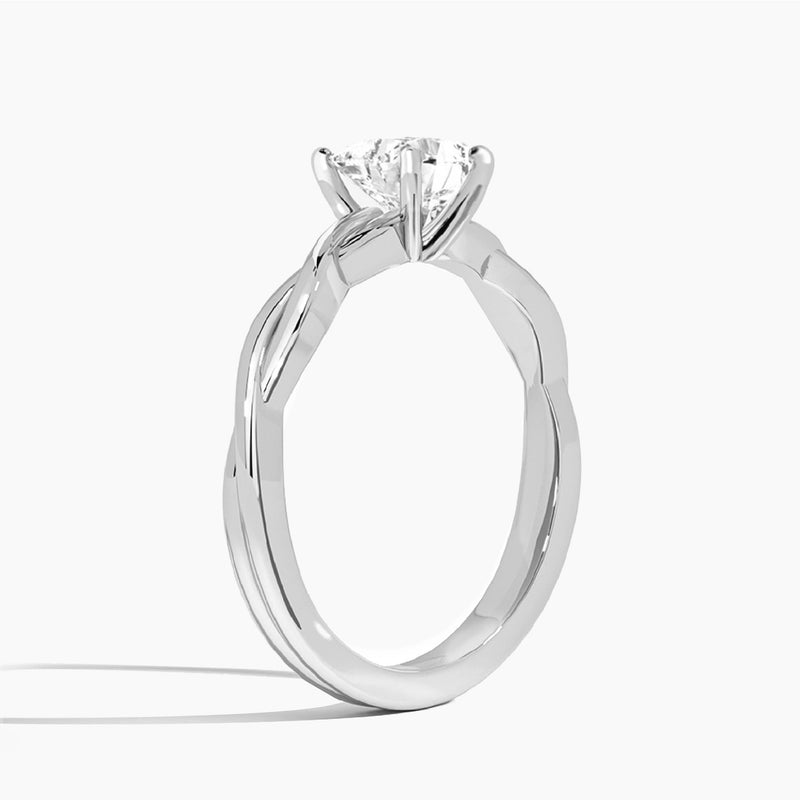
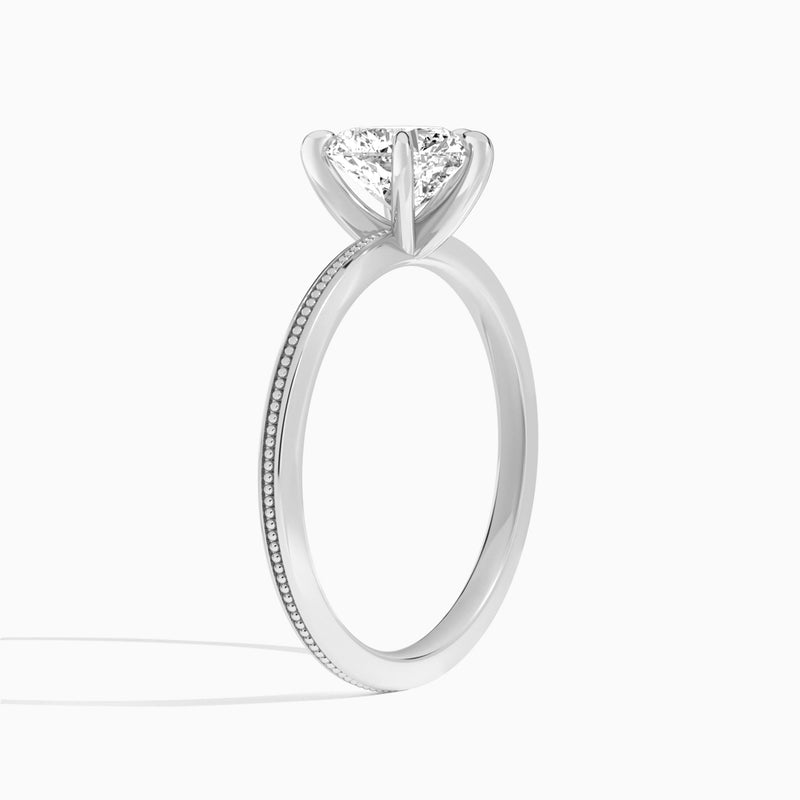
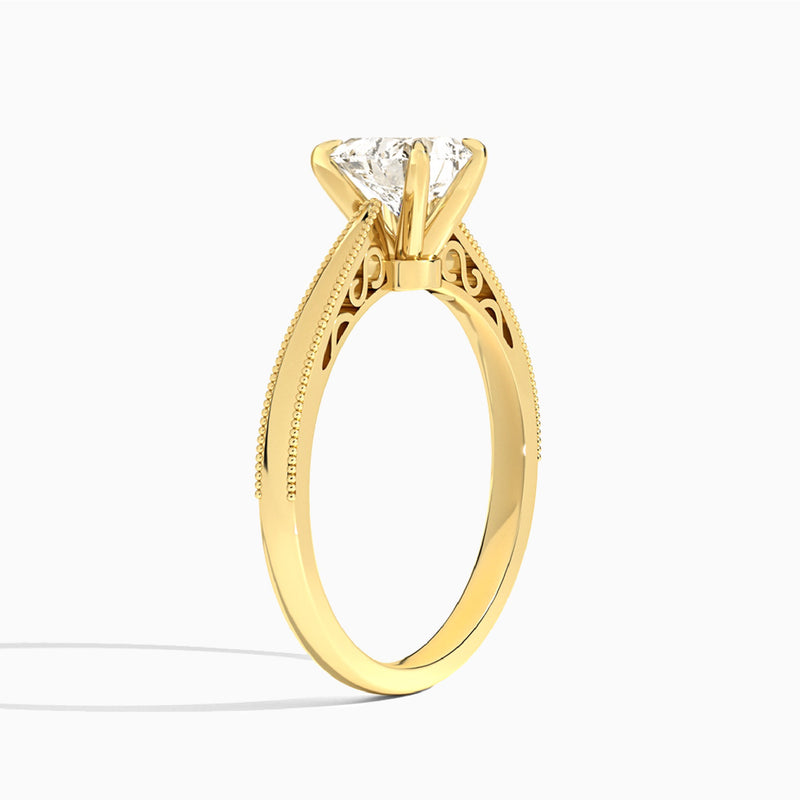
- The Five-Prong Solitaire: If you love a classic, open solitaire look, ensure your setting uses a five-prong layout with your heart shaped diamond. This includes standard prongs to support the rounded lobes, but also a prong to fully protect the sharp bottom tip from everyday bumps.
- The Three-Stone Romantic Balance: Flanking a heart centerpiece with two crisp, geometric side stones—like small step-cut baguettes or tapered bullets—creates a gorgeous architectural contrast that balances the organic curves of the heart with clean, modern lines.
Find Your Perfect Heart Diamond Engagement Ring at Lucenjuri
Choosing a heart shaped lab grown diamond is all about celebrating a look that is unapologetically bold, highly stylized, and full of deep personal meaning. It pairs a historic, brilliant faceting heritage with the ultimate expression of modern individuality and sustainable value.
Ready to design your own custom piece? Whether you want to customize a sleek bezel solitaire, explore a classic multi-prong setting, or find the perfect matching band to complete your stack, we are ready to bring your idea to life. Browse our curated collection of heart shaped rings to find your initial inspiration, or connect with our jewelry consultants today to map out your layout. Let’s create a ring that fits you perfectly.
FAQs
How do I choose the perfect engagement ring?
Choosing the perfect engagement ring is a personal journey that reflects your unique love story. It’s less about a "formula" and more about intuition. Start by observing. Does your partner gravitate toward vintage charm or sharp, modern lines? Do they wear gold, or is their jewelry box strictly silver-toned? If you're not sure, ask friends or family for help, or even discuss their tastes openly.
Once you have the vibe, focus on the diamond. The Four C’s—Carat, Cut, Clarity, and Color—are key factors to consider when choosing your diamond. At Lucenjuri, we have a wide range of lab grown diamonds that are both stunning and sustainable, allowing you to choose the perfect stone for your budget.
Why is the cut quality so critical for a heart-shaped diamond?
The heart shape is one of the most technically difficult cuts for a diamond cutter to execute. It requires absolute, dead-on structural precision to balance the curves perfectly. You must ensure the top V-shaped cleft is sharp and distinct, the rounded lobes are the exact same height and fullness, and the bottom tip is crisp. If the cut is poor, the stone will look distorted or resemble a pear shape from a distance.
What is the best carat weight for a heart-shaped engagement ring?
The unique, iconic silhouette of a heart diamond is very difficult to see in smaller stones. To ensure the shape has a powerful, unmistakable presence on your finger, it is highly recommended to stay at a carat weight of 0.75 carats or higher—and ideally above 1.00 to 2.00 carats—so the details are beautifully defined.
Which ring setting type is best for protecting a heart diamond?
Because it features a sharp bottom tip and an intricate cleft, protecting those edges is key. A modern Bezel setting completely wraps the heart in a slim rim of solid metal, offering maximum security. If you prefer an open prong look, opt for a Five-Prong layout that includes a specialized V-prong or chevron prong to fully shield that sharp bottom point from everyday accidental knocks.
Which precious metal should I choose for my heart-shaped diamond ring?
Heart cuts tend to hold onto body color slightly more within their rounded lobes and sharp bottom tip. If you want a crisp, icy look in Platinum or White Gold, it is best to stick to a high color grade between D and G. If you choose a warm Yellow Gold or Rose Gold band, you can easily drop down to an H or I grade, as the metal warmth beautifully blends with the stone.